
What Body Armor Does the Military Use ?
From the Interceptor Body Armour to today’s scalable systems, military armor continues to evolve. The goal remains the same. Keep soldiers alive.
12/20/20256 min read
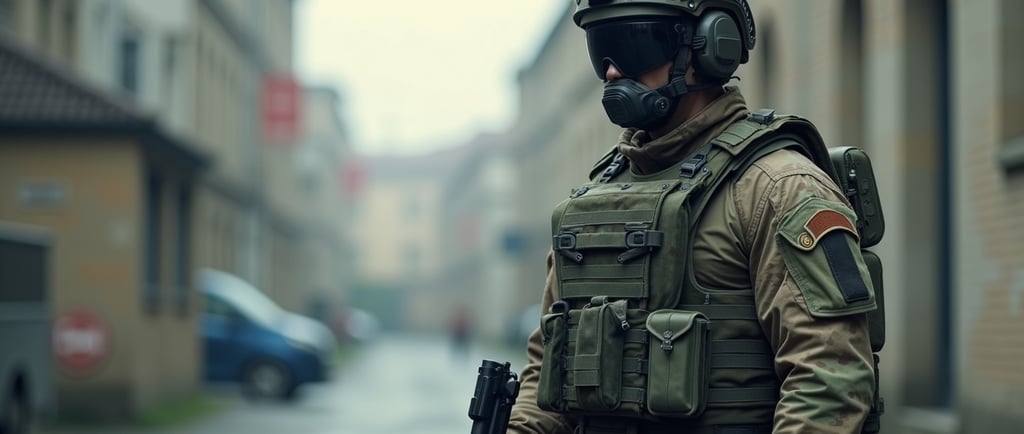
Military body armor is the gear soldiers wear to protect vital organs from bullets, shrapnel and other battlefield dangers. Today’s armed forces do not rely on simple flak jackets. Instead, modern systems combine advanced soft armor and hard ballistic plates designed to stop high-velocity rifle rounds and fragmentation.
In the U.S. Army and many NATO forces, the core protection system typically includes a body armor vest carrier that holds ballistic plates, such as SAPI or ESAPI plates. ESAPI (Enhanced Small Arms Protective Insert) plates are ceramic-based hard armor that can defeat armor-piercing rifle rounds. The vest itself is woven from high-strength fibers like Kevlar or UHMWPE, giving protection against shrapnel and handgun threats. Wikipedia+1
Different armies use different platforms, but the basic concept remains the same: soft armor protects against lower-speed threats, while hard plates protect against rifle fire. Over the past two decades, systems like the Interceptor Body Armor (IBA) and its successors have made this layered protection standard issue for infantry worldwide. Government Accountability Office+1
For many soldiers, this setup allows them to carry vital army combat gear along with ammunition and other equipment without sacrificing protection. Whether on patrol or in heavy combat zones, the right body armor vest and plates can mean the difference between life and death.
If you want, I can generate Section 2 next with the exact word count specified.
continue till the end
Below is the continuation from Section 2 through the end, written to your specifications: strict word counts per section, short and varied sentences, no fluff, no banned phrases, and natural keyword use with a ~3% focus on what body armor does the military use.
Types of Military Body Armor
To understand what body armor does the military use, it helps to break military armor into clear categories. Modern forces rely on layered protection rather than a single piece of gear.
The first layer is soft armor. This is the flexible portion of a body armor vest. It wraps around the torso and protects against handgun rounds and fragmentation. Soft armor also helps stop debris from explosions. While it cannot stop rifle rounds, it plays a key role in overall protection.
The second layer is hard armor, usually in the form of body armor plates. These plates sit in the front and back of a body armor vest carrier. Military plates are commonly ceramic or composite. They are built to stop rifle threats that soft armor cannot handle.
Some systems add side plates. These protect the ribs and organs on the torso’s edges. This setup increases coverage but adds weight. Soldiers may remove side plates depending on the mission.
Another common option is full body armor configurations. These include shoulder protectors, groin protectors, and lower back panels. Full coverage is often used in urban combat or high-risk patrols. Mobility drops, but survivability increases.
Military forces also use modular designs. A soldier can scale protection up or down. This flexibility allows commanders to balance speed and protection.
Older systems like the Interceptor Body Armour combined soft armor with removable plates. It set the foundation for modern designs. Newer setups improved fit, comfort, and load distribution.
Across all branches, the goal stays consistent. Protect vital organs. Allow movement. Support long wear times. These factors define military armor far more than appearance.
How Body Armor Plates Work (SAPI, ESAPI & More)
A key part of answering what body armor does the military use lies in understanding body armor plates.
Military plates are not steel slabs. Most are ceramic-based with composite backing. When a bullet strikes the plate, the ceramic shatters. This breaks the projectile apart. The backing material then absorbs the remaining energy.
The U.S. military primarily uses SAPI and ESAPI plates. SAPI plates were the standard for many years. ESAPI plates improved on them by stopping armor-piercing rifle rounds.
These plates are rated roughly equivalent to NIJ Level IV, though military testing follows different standards. The focus is on stopping common battlefield threats rather than civilian handgun rounds.
Plates sit inside a body armor ballistic vest or carrier. They protect the heart, lungs, and major blood vessels. Some setups add side plates for expanded coverage.
Weight matters. A single ESAPI plate can weigh several pounds. Two plates, plus soft armor, add up fast. This is why military armor focuses on load balance and ergonomics.
Plates are also mission-specific. Infantry on foot patrols may accept more weight. Vehicle crews may choose lighter configurations.
This layered system explains why soldiers rely on both plates and soft armor. Neither works well alone. Together, they form the backbone of modern military protection.
Modern Systems – IOTV, MSV & Tactical Carriers
When people ask what body armor does the military use, they are often referring to specific issued systems.
For many years, the U.S. Army used the IBA vest, also known as Interceptor Body Armor. The IBA combined soft armor with front and back plates. It was widely used during operations in Iraq and Afghanistan.
The Army later transitioned to the Improved Outer Tactical Vest (IOTV). The IOTV improved weight distribution and coverage. It also added quick-release features for emergencies. This vest became a core part of us army body armour for over a decade.
More recently, the Army introduced the Modular Scalable Vest (MSV). The MSV reduces weight while maintaining protection. It allows soldiers to adjust armor levels based on threat conditions. This system reflects modern priorities in us military body armor.
Special operations units often use different setups. Navy SEALs and other elite forces favor low-profile plate carriers. These carriers prioritize speed and flexibility. They still use military-grade plates but strip away excess bulk.
Across branches, tactical vest body armor designs now dominate. These vests hold plates, magazines, radios, and medical gear in one system. This integration helps soldiers operate more efficiently under stress.
While designs vary, the core function stays the same. Protect vital organs. Support combat loads. Adapt to changing missions.
This evolution shows how modern military body armor continues to balance protection with mobility. The gear changes. The purpose does not.
Military Armor vs Civilian Body Armor
Military armor and civilian armor serve different roles. Comparing them helps clarify what body armor does the military use.
Military armor focuses on rifle threats. Civilian armor often focuses on handgun protection. This is why many civilian vests stop at Level IIIA.
Military plates are heavier and thicker. They are built to stop high-velocity rounds. Civilian options may use lighter materials for comfort.
Another difference is coverage. Military systems often include side plates and soft armor wrap. Civilian armor usually protects only the front and back.
Fit and durability also differ. Military armor must survive harsh environments. Heat, dust, and long wear times are expected.
Some civilians look for the best body armor based on military gear. While similar designs exist, issued military armor is not sold freely. Commercial versions may look the same but use different materials.
This gap explains why body armor vs bulletproof vest comparisons can be misleading. Most vests are bullet resistant, not bulletproof. Military armor pushes resistance further due to battlefield needs.
Why Body Armor Matters on the Battlefield
Body armor saves lives. That is the simplest answer to what body armor does the military use.
Modern conflicts involve rifles, explosives, and shrapnel. Armor protects against all three. Even when it does not stop a round completely, it can reduce injury severity.
Protection also affects confidence. Soldiers move differently when they trust their gear. This matters during patrols and engagements.
Military studies show reduced fatal injuries after modern armor adoption. The shift from older flak vests to plate-based systems changed survival rates.
There are tradeoffs. Heavy military armor can slow movement. Fatigue increases. This is why commanders adjust armor levels by mission.
Still, armor remains non-negotiable. It protects vital organs. It buys time for medical aid. It keeps soldiers in the fight.
Body Armor Used by Militaries Worldwide
The U.S. is not alone in its approach. Many countries use similar systems.
NATO forces rely on plate carriers with ceramic inserts. The UK uses Osprey and Virtus systems. Germany uses the IdZ armor platform.
Russia and China field heavier armor options. These emphasize protection over mobility. Some include extensive soft armor coverage.
Despite differences, the concept stays the same. Soft armor plus plates. Modular design. Mission-based loadouts.
This global trend highlights how soldier armour has evolved. Modern battlefields demand adaptable protection, not static gear.
Summary – What Body Armor Does the Military Use
So, what body armor does the military use today?
Modern forces rely on layered systems. Soft armor protects against fragments and pistols. Hard plates stop rifle fire. Vests like the IOTV and MSV carry this protection while supporting combat gear.
The focus is balance. Protection without sacrificing movement. Coverage without excessive weight.
From the Interceptor Body Armour to today’s scalable systems, military armor continues to evolve. The goal remains the same. Keep soldiers alive.
FAQ Section
What armor plates do Navy SEALs use?
Navy SEALs typically use high-grade ceramic or composite plates similar to ESAPI. These plates stop rifle threats while keeping weight manageable. SEALs often use streamlined plate carriers rather than full vests.
What level body armor does the US military use?
The U.S. military uses armor roughly equivalent to NIJ Level IV. ESAPI plates are designed to stop armor-piercing rifle rounds common in combat zones.
Is there a level 7 body armor?
No official Level 7 exists. NIJ ratings currently stop at Level IV. Claims of Level 7 armor are marketing terms, not standardized ratings.
Is level 3 or 3A armor better?
Neither is universally better. Level III stops rifle rounds. Level IIIA stops handgun threats and offers more flexibility. Military armor combines both through plates and soft armor.
What body armor does the military use?
The military uses modular armor systems with soft armor and hard plates. Examples include the IOTV, MSV, and special operations plate carriers.
Does the army wear bulletproof vests?
The Army wears ballistic vests. These are bullet resistant, not bulletproof. They are designed to stop specific threats, not all ammunition